
Prebiotics or Probiotics for Dogs? How to Know Which One to Choose
If you have been looking into your dog’s gut health, you have probably come across two terms again and again: prebiotics and probiotics. They sound similar, but they are not the same thing.
So, should you choose prebiotics or probiotics for dogs?
The simplest answer is this: probiotics provide beneficial microorganisms, while prebiotics help feed beneficial microorganisms already living in the gut. Depending on your dog’s needs, one may make more sense than the other, and some products contain both.
Understanding the difference can make it much easier to choose a gut-health supplement without simply buying the first product labeled “probiotic.”
Important: This article is for general educational purposes and is not veterinary advice. If your dog has persistent diarrhea, vomiting, blood in the stool, unexplained weight loss, severe abdominal pain, or another concerning symptom, speak with your veterinarian.
Affiliate Disclosure
Some of the links in this article are affiliate links, which means PawsintivelyHealthy may earn a commission if you purchase a product through one of our links, at no additional cost to you. We only recommend products that we believe may be useful to dog owners, and our recommendations are based on the product and its intended use—not simply on whether it offers an affiliate commission.
Always read product labels and follow the manufacturer’s directions. When you’re unsure whether a supplement is appropriate for your dog, talk with your veterinarian.
Table of Contents
- What Are Probiotics for Dogs?
- What Are Prebiotics for Dogs?
- Prebiotics vs Probiotics for Dogs
- Why Your Dog’s Gut Health Matters
- Can Dogs Take Prebiotics and Probiotics Together?
- Which One Should You Choose?
- Real-Life Scenarios
- Mistakes to Avoid
- Tips for Choosing a Dog Gut Health Supplement
- Frequently Asked Questions
- Final Recommendation
What Are Probiotics for Dogs?
Probiotics are live microorganisms that can provide health benefits when given in appropriate amounts.
You can think of probiotics as helpful bacteria being introduced into the digestive system.
Your dog naturally has a community of microorganisms living throughout the digestive tract. This community is often referred to as the gut microbiome. It includes bacteria and other microorganisms, and maintaining a healthy balance is an important part of digestive health.
Probiotic supplements for dogs may contain specific strains of beneficial bacteria. Depending on the product, they may be available as powders, capsules, soft chews, or other forms.
Common reasons dog owners look into probiotics include:
- Supporting normal digestion
- Supporting a healthy intestinal microbiome
- Helping maintain normal stool consistency
- Supporting digestive health during changes in routine
- Supporting the gut after certain disruptions
However, not every probiotic product is identical.
Different strains can have different characteristics, which means the simple statement “this contains probiotics” does not tell you everything you need to know.
That is why choosing a product based on its ingredients and intended purpose is more useful than simply looking for the word “probiotic” on the label.
What Are Prebiotics for Dogs?
Prebiotics work differently.
Instead of adding beneficial bacteria directly, prebiotics are substances that can be used as food by certain microorganisms in the gut.
In simple terms:
Probiotics = beneficial microorganisms.
Prebiotics = nourishment for certain beneficial microorganisms.
This distinction is important because introducing beneficial bacteria is only part of the bigger picture. Those microorganisms also need an environment where they can thrive.
Prebiotics are commonly associated with certain types of dietary fiber and other compounds that reach the lower digestive tract without being fully digested earlier in the digestive process.
Some dog foods and supplements contain prebiotic ingredients specifically to support the gut microbiome.
This is one reason you may see ingredients such as certain fibers or prebiotic compounds included in dog digestive-health products.
Prebiotics vs Probiotics for Dogs: What’s the Difference?
The easiest way to understand the difference is to imagine your dog’s gut as a garden.
Probiotics are like adding beneficial plants to the garden.
Prebiotics are like providing nutrients that help the plants already there grow.
They serve different purposes, but they can complement one another.
| Feature | Probiotics | Prebiotics |
|---|---|---|
| What they are | Beneficial microorganisms | Substances used by certain gut microorganisms |
| Main role | Introduce or provide beneficial microorganisms | Help support beneficial microorganisms already present |
| Common form | Chews, powders, capsules | Fiber-rich ingredients, powders, foods |
| Focus | Microorganisms | Nutrition for microorganisms |
| Can they be combined? | Yes | Yes |
The important takeaway is that prebiotics and probiotics are not competing products.
They can be two different pieces of the same overall gut-health strategy.
Why Your Dog’s Gut Health Matters
The digestive system does much more than process food.
The gut interacts with many parts of the body, and the microorganisms living in the digestive tract are an important part of normal digestive function.
That is why dog owners often start paying attention to gut health when something changes.
Maybe your dog has occasional digestive upset. Maybe their stool consistency has changed. Maybe you are transitioning to a new food. Or perhaps you are simply trying to support their digestive system as part of a broader wellness routine.
The important thing is not to treat every digestive change as something that automatically requires a supplement.
A dog’s diet, hydration, activity level, stress, medications, underlying health conditions, and many other factors can affect digestion.
Supplements can be useful in the right situation, but they should not replace finding the underlying cause of an ongoing problem.
Can Dogs Take Prebiotics and Probiotics Together?
In many cases, dog supplements are specifically formulated to provide both prebiotics and probiotics.
These combinations are sometimes called synbiotics.
The reasoning is straightforward: probiotics provide beneficial microorganisms, while prebiotic ingredients can help support certain microorganisms already present in the digestive tract.
That does not mean every dog automatically needs a combination supplement.
It means that prebiotics and probiotics can work as complementary parts of a gut-health approach.
If you are comparing products, look at the complete ingredient list rather than assuming a product is better simply because it contains more ingredients.
A simple, well-formulated product can be more useful than a product with a long ingredient list that you do not understand.
Which One Should You Choose for Your Dog?
This is where things get more practical.
Choose a probiotic if…
You are specifically looking for a product designed to provide beneficial microorganisms.
Look for a dog-specific product that clearly identifies the probiotic strains it contains and provides appropriate usage instructions.
You should also consider how easy the product will be to give consistently.
A theoretically excellent supplement does not help much if your dog refuses to take it.
Choose a prebiotic if…
You are primarily interested in supporting the microorganisms already present in your dog’s digestive system through appropriate dietary components.
Prebiotic ingredients may already be present in your dog’s food, so a separate prebiotic supplement is not automatically necessary.
Check the food and supplement labels before adding another product.
Consider a combination if…
You want a product that provides both probiotics and prebiotic ingredients.
Combination products can be convenient because you do not necessarily have to manage two separate supplements.
However, the same rule applies: read the label and understand what you are actually giving your dog.
Real-Life Scenarios
Scenario 1: You’re a beginner
If you have never used a gut-health supplement before, do not feel like you need to buy several products at once.
Start by looking at your dog’s current food, diet, routine, and overall digestive health.
If there is a specific reason you are considering a supplement, discuss it with your veterinarian and choose a straightforward product appropriate for dogs.
Scenario 2: Your dog has occasional digestive changes
Occasional changes can happen for many reasons.
A new treat, food change, stressful event, or other routine disruption may affect digestion.
Instead of immediately stacking multiple supplements, first consider what changed.
If digestive problems continue or become significant, talk with your veterinarian rather than trying to solve the problem with supplements alone.
Scenario 3: You’re already giving a probiotic
If your dog is already taking a probiotic, you may not need to automatically add a separate prebiotic.
Check the label.
Some probiotic formulas already contain prebiotic ingredients, which means you may already be getting both.
Scenario 4: You’re comparing several supplements
This is where labels become especially important.
Instead of choosing the product with the biggest marketing claims, compare:
- The specific ingredients
- The probiotic strains
- The amount provided
- Feeding instructions
- Storage requirements
- Intended use
- Quality and transparency of the manufacturer
The goal is not to find the product with the longest label.
The goal is to find the product that makes the most sense for your dog.
Mistakes to Avoid
1. Assuming prebiotics and probiotics are the same
They are not.
Understanding the difference helps you make a more informed decision.
2. Buying based only on the word “probiotic”
Two probiotic products can have very different formulations.
Look beyond the front of the package.
3. Giving your dog multiple supplements at once
Adding several new products simultaneously can make it difficult to determine what is helping, what is unnecessary, or what may be causing digestive changes.
Whenever possible, keep things simple.
4. Ignoring the rest of the diet
A supplement cannot compensate for every dietary issue.
Your dog’s overall diet is still the foundation of their nutrition.
5. Using supplements to hide ongoing symptoms
A supplement should not be used as a substitute for veterinary evaluation when a dog has persistent or serious digestive problems.
6. Assuming more is automatically better
More strains, more ingredients, or a higher number on the label does not automatically mean a product is better for your dog.
Tips for Choosing a Dog Gut Health Supplement
If you decide a supplement is appropriate, here are some practical things to look for.
Look for clear labeling
You should be able to understand what the product contains and how it should be given.
Check the probiotic strains
A label that clearly identifies its probiotic microorganisms is more useful than vague wording such as simply “proprietary probiotic blend.”
Consider the delivery method
Powder, chew, capsule, or another format can all work differently for different dogs.
Choose something you can realistically give consistently.
Pay attention to storage
Some probiotic products have specific storage requirements. Follow the manufacturer’s instructions to help maintain product quality.
Look at the complete formula
If you are comparing prebiotics and probiotics, check whether the product contains one, the other, or both.
Don’t forget your dog’s individual needs
Age, diet, size, existing health issues, medications, and digestive history can all influence whether a particular supplement is appropriate.
When in doubt, ask your veterinarian before introducing a new supplement.
Frequently Asked Questions
Are prebiotics or probiotics better for dogs?
Neither is automatically better.
They serve different purposes. Probiotics provide beneficial microorganisms, while prebiotics provide substances that can support certain microorganisms already living in the gut.
Can dogs take prebiotics and probiotics together?
Yes, products containing both are commonly available. Combination formulas are designed to provide both beneficial microorganisms and prebiotic ingredients.
However, whether your individual dog needs both is a separate question.
Do dogs need probiotics every day?
Not every dog necessarily needs a daily probiotic supplement.
Some dogs may benefit from additional digestive support in certain circumstances, while others may maintain normal gut health through their regular diet and routine.
Are probiotics safe for dogs?
Many dogs tolerate properly formulated dog-specific probiotics well, but individual responses can vary.
If your dog has a medical condition, takes medications, is immunocompromised, or has persistent digestive symptoms, talk with your veterinarian before starting a supplement.
Can dog food contain prebiotics?
Yes. Some dog foods contain ingredients that provide prebiotic fibers or other components intended to support digestive health.
This is another reason to check your dog’s existing food before adding a separate supplement.
Products that we recommend
“`html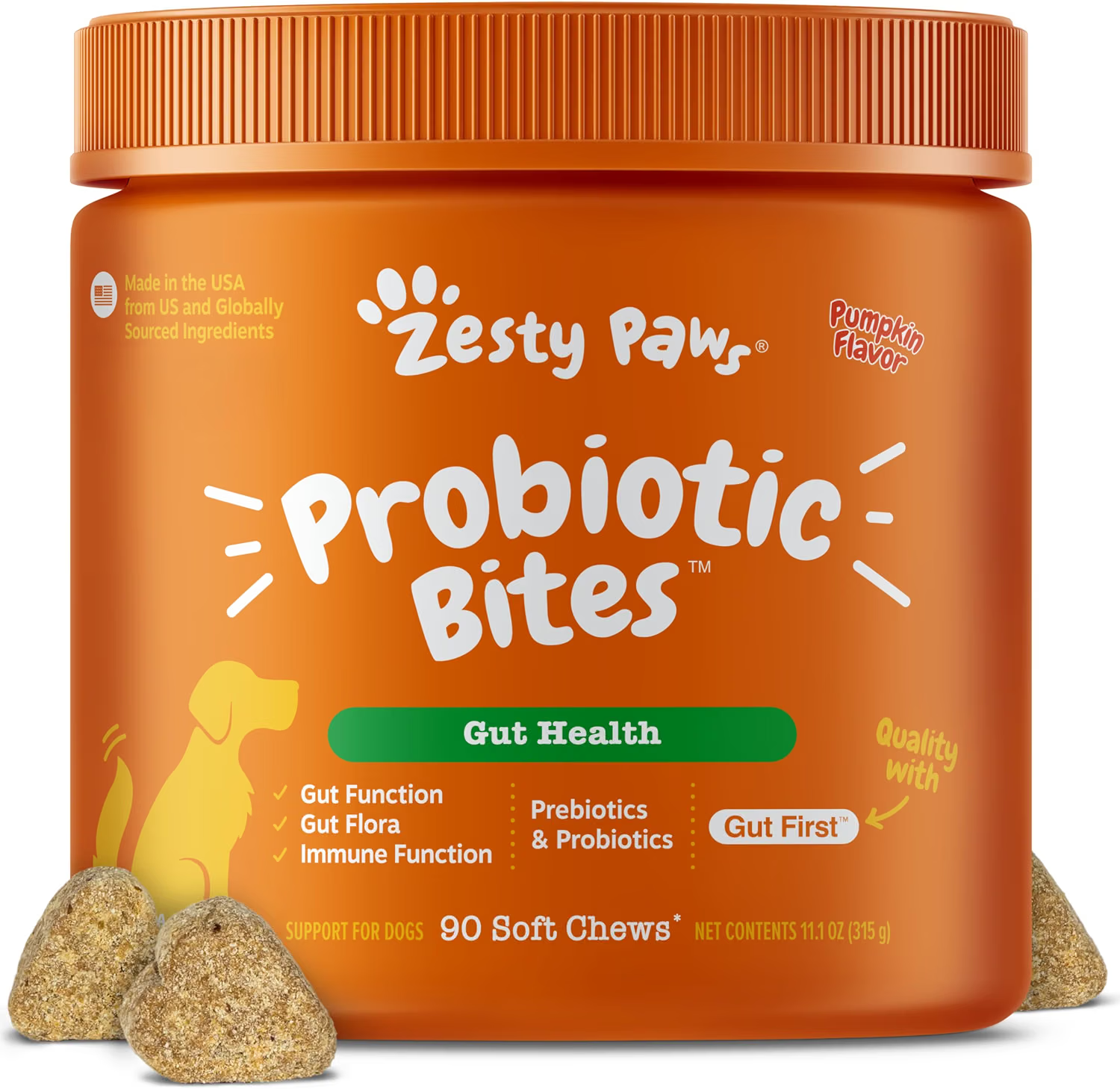
Zesty Paws Probiotics for Dogs – Gut Health Soft Chews
A convenient probiotic soft chew designed to support your dog’s digestive and gut health. The pumpkin flavor also makes this an easy format for dogs that don’t enjoy powders or capsules.
Pros
- Contains six probiotic strains
- Soft chew format is easy to give
- Pumpkin flavor may be appealing to dogs
- Includes digestive enzymes
Cons
- Costs more than some basic probiotic powders
- Primarily focused on probiotic support rather than being a dedicated prebiotic formula
Affiliate Disclosure: This is an affiliate link, which means we may earn a commission if you make a purchase through our link, at no additional cost to you. Always follow the manufacturer’s directions and consult your veterinarian if you have questions about whether a supplement is appropriate for your dog.

Native Pet Probiotics for Dogs
A dog-specific probiotic powder designed to support gut and digestive health. This formula combines multiple probiotic strains with prebiotic ingredients, making it a strong option for dog owners who want both in one supplement.
Pros
- 6 billion CFUs per serving
- Contains multiple dog-specific probiotic strains
- Includes prebiotic ingredients
- Easy-to-use powder format
- Vet-formulated
- Easy to mix with your dog’s food
Cons
- Powder may be less convenient than a soft chew for some dogs
- Flavor may not appeal to every dog
- Serving amount varies based on dog size
Affiliate Disclosure: This is an affiliate link, which means we may earn a commission if you make a purchase through our link, at no additional cost to you. Always follow the manufacturer’s directions and consult your veterinarian if you have questions about whether a supplement is appropriate for your dog.
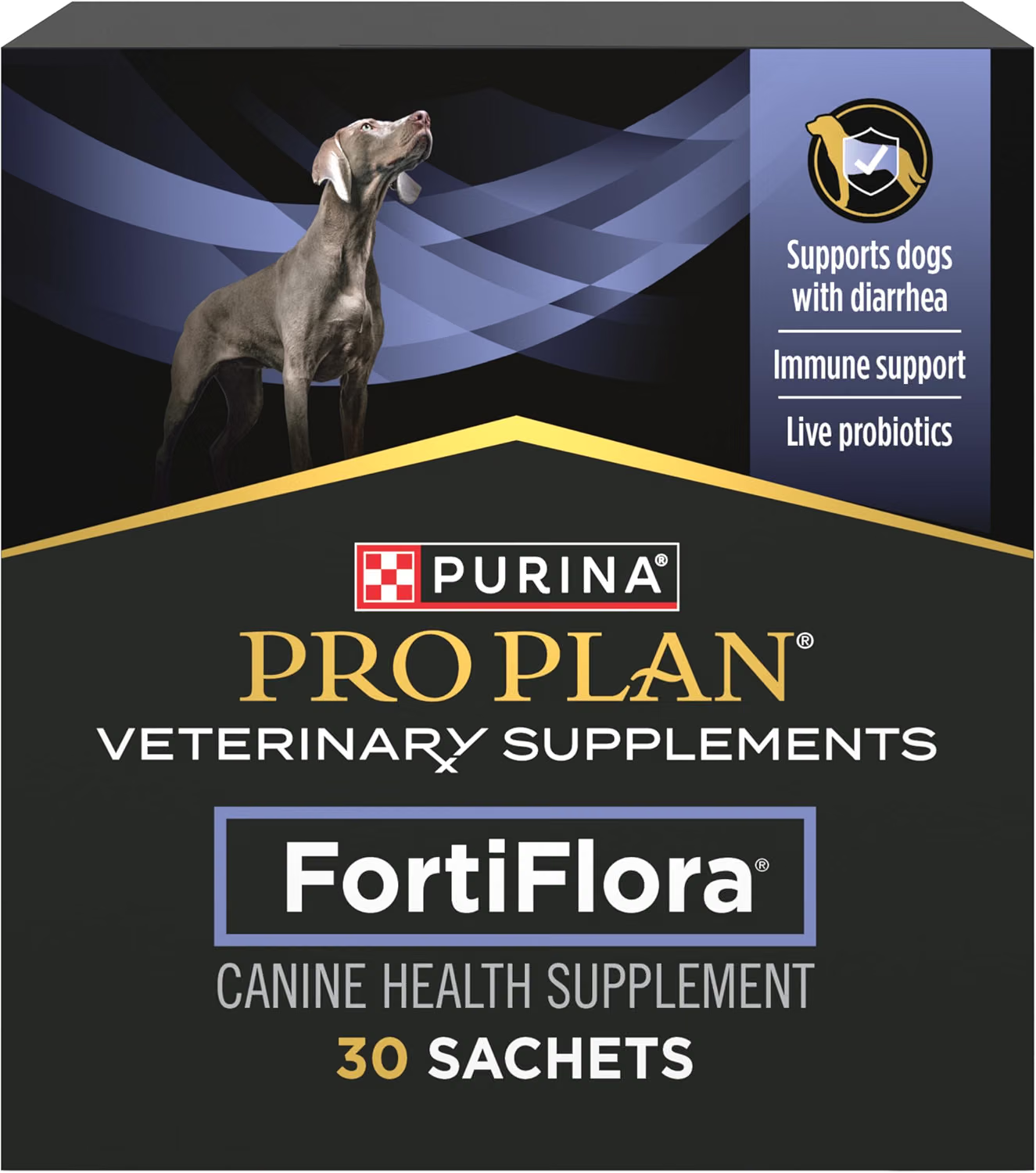
Purina Pro Plan Veterinary Supplements FortiFlora
A convenient probiotic powder designed to support digestive and immune health. FortiFlora comes in individual packets that can be sprinkled over your dog’s food, making it a simple option for owners who prefer a pre-portioned supplement.
Pros
- Convenient individual packets
- Easy to sprinkle over food
- Designed specifically for dogs
- Veterinary-focused supplement line
- Useful option for digestive support
Cons
- Primarily a probiotic rather than a prebiotic + probiotic formula
- Individual packets create more packaging
- May cost more than some basic probiotic powders
Affiliate Disclosure: This is an affiliate link, which means we may earn a commission if you make a purchase through our link, at no additional cost to you. Always follow the manufacturer’s directions and consult your veterinarian if you have questions about whether a supplement is appropriate for your dog.
Final Recommendation
So, prebiotics or probiotics for dogs — which one should you choose?
Start with the basic difference:
Probiotics provide beneficial microorganisms. Prebiotics help support beneficial microorganisms through specific dietary components.
Neither automatically replaces the other.
If you are considering a probiotic, focus on the actual strains and formulation rather than the marketing on the front of the package. If you are considering a prebiotic, look at the ingredients and consider whether your dog’s current diet already provides appropriate sources.
And if you find a product that contains both, understand what each part of the formula is intended to do.
Most importantly, don’t turn every digestive change into a supplement-shopping problem. Look at your dog’s entire diet and routine, introduce changes thoughtfully, and involve your veterinarian when digestive symptoms are persistent, severe, or unusual.
👉 If you’re unsure where to start, focus first on your dog’s overall diet and digestive health, then choose a simple, clearly labeled dog-specific supplement only when there is a good reason to add one.
Leave a Reply