Introduction
Is your dog showing signs of discomfort or reluctance to move? Early detection of joint pain can make a significant difference in their quality of life. It always starts with something small.
Maybe your dog doesn’t rush to greet you at the door like they used to. Maybe they hesitate before jumping on the couch or seem a little stiff getting up in the morning. As dog parents, we’re tuned into the little quirks that make our pups unique—but sometimes those small changes are trying to tell us something much bigger.
Joint pain and arthritis in dogs are more common than most people realize, especially as our companions get older. But here’s the hard part: dogs don’t always show pain in obvious ways. They adapt, they push through, and they try to keep up—until one day they can’t.
In this guide, we’re breaking down the subtle (and not-so-subtle) signs of joint discomfort so you can catch issues early and help your dog stay mobile, playful, and pain-free as long as possible.
And if you’re looking for a full overview of joint support, pain relief, and mobility tips, check out our Complete Guide to Joint Health for Dogs—it’s the hub for everything we’re building in this series.
Let’s start by looking at what to watch for—because your dog may already be trying to tell you something.
🐾 Behavioral Signs of Joint Pain
Dogs can’t tell us when something hurts—but they can show us. The challenge is recognizing those subtle shifts in behavior that often get dismissed as “just getting older.” In reality, your dog might be compensating for joint pain in ways that are easy to overlook.
Here are the most common behavioral changes that may signal joint discomfort or early arthritis:
1. Reluctance to Move or Play
A once-active dog who now hesitates to fetch, go on walks, or jump into the car could be guarding sore joints. It’s not always about laziness or aging—it’s about discomfort.
2. Irritability or Withdrawal
Pain can cause dogs to become grumpy or snappy, especially if touched near sore areas. Some dogs become more withdrawn, hiding or avoiding interaction altogether. That’s not “bad behavior”—it’s a cry for help.
3. Changes in Sleep Habits
If your dog is sleeping more than usual or seems restless at night, joint pain could be interfering with their ability to get comfortable.
4. Slower to Rise or Lay Down
This is one of the first telltale signs. Struggling to get up from a nap or slowly lowering themselves to the ground shows stiffness in the joints, especially in the hips or elbows.
5. Pacing or Restlessness
Dogs with chronic pain often can’t find a comfortable position. If your pup is circling the bed multiple times or frequently getting up and down, it might be time to investigate further.
🐾 Physical Symptoms to Watch For
While behavioral changes are often the first clues, physical symptoms give you a clearer picture of what’s going on beneath the surface. These signs are easier to spot once you know what to look for—especially during daily routines like walks, grooming, or even cuddling on the couch.
1. Limping or Favoring a Leg
Whether it’s a slight limp after getting up or consistently avoiding putting weight on one side, limping is a top indicator of joint pain. Some dogs limp only after exercise or first thing in the morning—both of which point to inflammation or stiffness.
2. Stiffness After Rest
Does your dog move like a rusty hinge after laying down for a while? That morning stiffness is often an early sign of arthritis or reduced joint lubrication.
3. Difficulty Jumping or Climbing Stairs
Reluctance to jump into the car, onto the couch, or climb stairs isn’t just a sign of old age. These movements require joint flexion, and if they’re painful, dogs will avoid them.
4. Muscle Loss in the Back Legs
As dogs stop using their back legs to full capacity—due to pain or stiffness—you’ll often notice muscle atrophy. Their thighs may look thinner or weaker over time, especially in large breeds.
5. Swollen or Warm Joints
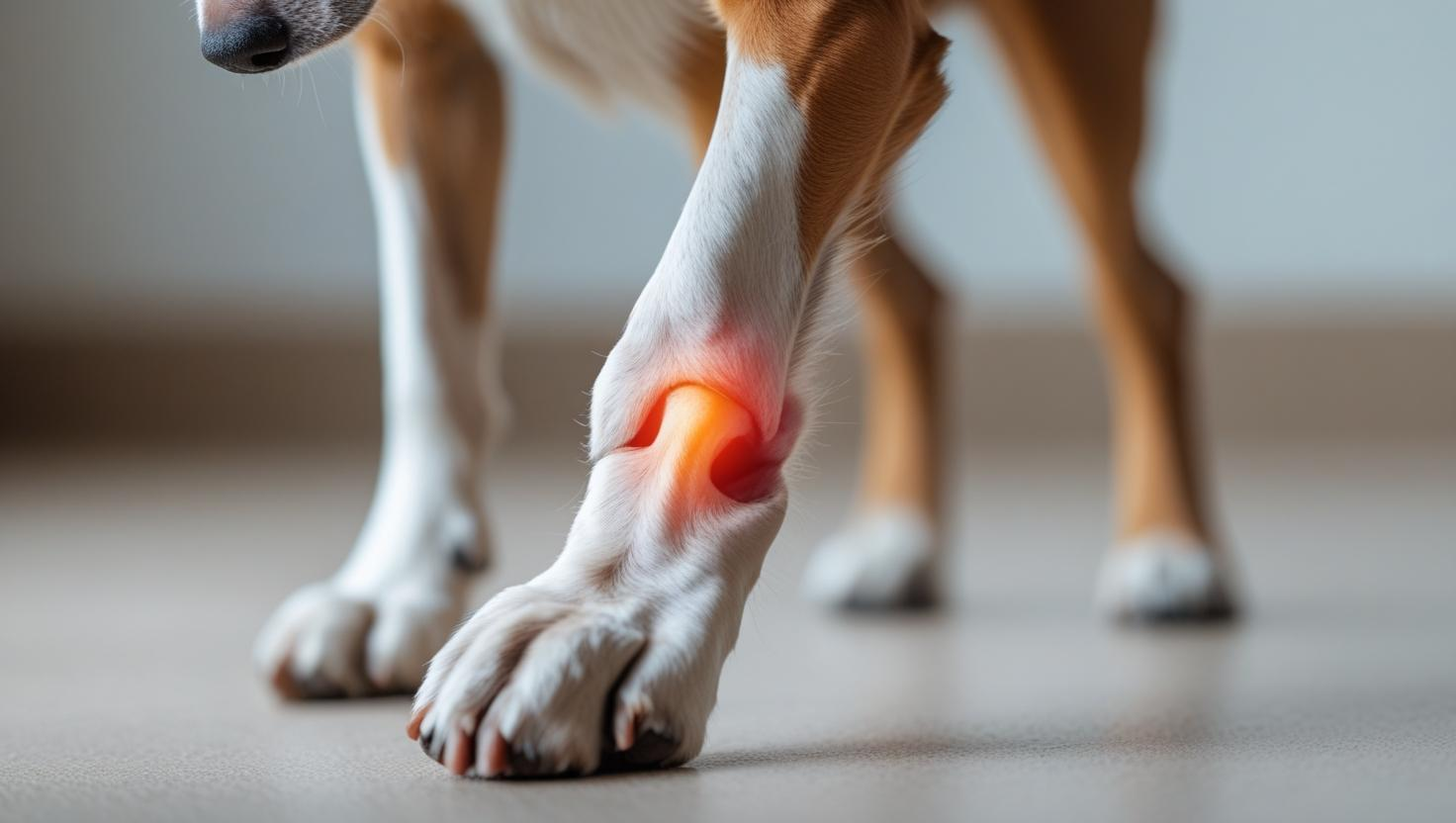
Gently feel around your dog’s elbows, knees, and hips. If a joint feels noticeably warmer or appears swollen compared to the other side, inflammation could be at play.
6. Posture Changes or Arched Back
Some dogs compensate for joint pain by shifting their weight, changing how they walk, or holding their back in a curved position. If your dog’s gait looks “off,” don’t ignore it.
🐾 Breeds More Prone to Arthritis
American Kennel Club (AKC) – Canine Arthritis Guide
https://www.akc.org/expert-advice/health/arthritis-in-dogs/
While any dog can develop joint issues, some breeds are simply more predisposed—either due to size, body structure, or genetics. If your dog falls into one of these categories, it’s wise to stay especially alert for early signs.
🐶 Large and Giant Breeds
Dogs like Labrador Retrievers, Golden Retrievers, German Shepherds, Rottweilers, and Great Danes are especially prone to hip and elbow dysplasia. Their larger frames put more stress on joints, making them more vulnerable to wear and tear.
🐶 Working and Sporting Breeds
High-energy dogs like Border Collies, Boxers, and Belgian Malinois are athletic by nature—but all that activity can lead to joint overuse or early arthritis if not properly supported.
🐶 Dachshunds, Corgis, and Basset Hounds
These long-backed, short-legged breeds are known to develop back and spinal issues like intervertebral disc disease (IVDD), which can mimic or contribute to joint stiffness and pain in the limbs.
🐶 Senior Dogs of Any Breed
Age is a risk factor on its own. Even small breeds that age more slowly—like Chihuahuas or Shih Tzus—can develop osteoarthritis as they enter their golden years.
📝 Pro Tip: If your dog is on the list above and you’re noticing some of the signs we’ve covered, early joint support and prevention go a long way. We dive into those strategies in our Joint Health Guide.
🐾 When to See a Vet
Some signs of joint pain can be managed at home with lifestyle changes, supplements, and early intervention. But other symptoms should never be ignored—especially if they start affecting your dog’s quality of life.
Here’s when it’s time to call your vet:
🚩 Your dog is limping consistently
If the limp lasts more than a day or two—or gets worse with activity—don’t wait. This could signal a degenerative joint issue, ligament injury, or advanced arthritis.
🚩 Obvious pain or vocalization
If your dog cries out when touched, flinches during certain movements, or avoids being handled, this is a sign that the pain has reached a more severe level.
🚩 Loss of mobility or function
Is your dog suddenly refusing walks, unable to get into the car, or struggling to rise? Sudden or progressive mobility loss needs veterinary evaluation to rule out things like ruptured ligaments or advanced joint degeneration.
🚩 Swelling, heat, or deformity in joints
Visible inflammation, bulging joints, or asymmetry between limbs may point to arthritis, fluid buildup, or other conditions requiring medical care.
🚩 You’re unsure or just have a gut feeling
You know your dog best. If something feels “off,” trust your instincts. A quick vet visit can give you peace of mind—and possibly catch a joint issue before it becomes chronic.
💡 Early intervention is key. Arthritis and joint degeneration can’t be reversed, but slowing their progression is possible with the right plan—and your vet is your best partner in that.
🐾 What You Can Do Next
If you’ve spotted some of the signs we’ve covered, don’t panic—this doesn’t mean your dog’s best days are behind them. With the right care, many dogs with joint pain go on to live active, comfortable, and joyful lives. It all starts with early action.
Here are a few steps you can take today:
✅ Start a Joint Health Journal
Keep notes on changes in your dog’s movement, mood, and habits. Even subtle patterns can help your vet track progression and build the right treatment plan.
✅ Talk to Your Vet About Diagnostics
They may recommend X-rays, joint palpation, or mobility tests to confirm arthritis, dysplasia, or ligament damage.
✅ Make Daily Adjustments at Home
Small changes like using ramps instead of stairs, elevating food bowls, or adding orthopedic bedding can take pressure off painful joints.
✅ Explore Joint Supplements
Omega-3s, glucosamine, chondroitin, green-lipped mussel—these natural ingredients are widely used to support joint function and reduce inflammation. (We’ll cover them in detail in an upcoming post.)
✅ Follow Our Full Joint Health Series
This post is part of a larger guide we’re building to help you manage, support, and protect your dog’s joints at every stage of life. Dive into it here:
👉 Joint Health for Dogs: Complete Guide to Pain Relief & Mobility🐾 FAQ: Common Questions About Dog Joint Pain {#faq}
❓ How do I know if my dog has joint pain or just sore muscles?
Sore muscles usually resolve in a day or two. Joint pain tends to linger or worsen—especially after rest or physical activity. If your dog limps consistently, shows stiffness after lying down, or avoids certain movements, it’s time to investigate further.
❓ My dog is limping but not whining—could it still be arthritis?
Yes. Dogs rarely vocalize pain unless it’s extreme. They’re instinctively wired to hide discomfort, so even subtle limping or hesitation to move could mean joint trouble.
❓ At what age do dogs usually develop arthritis?
While arthritis is more common in senior dogs, early signs can show up in middle age—especially in large or active breeds. Some dogs may begin experiencing joint degeneration as early as 5 or 6 years old.
❓ Can weather affect my dog’s joints?
Absolutely. Cold, damp, or rapidly changing weather can increase stiffness and discomfort—just like in humans. You might notice your dog being more sluggish or reluctant to move on colder days.
❓ What are natural ways to help my dog’s joints?
Supplements like glucosamine, chondroitin, turmeric, and omega-3s are popular options. Weight management, low-impact exercise, joint-friendly bedding, and ramps can also make a huge difference. (We’ll cover all of this in our upcoming post on natural joint support.)
❓ Should I stop walking my dog if they have joint pain?
Not necessarily. Movement is important for joint health, but it needs to be low-impact and consistent. Shorter walks, softer surfaces, and avoiding high-impact play are usually safer options—talk to your vet for a tailored plan.
❓ What’s the best first step if I’m noticing some of these signs?
Start by logging what you’re seeing and schedule a vet visit. Early detection can slow progression and keep your dog comfortable longer. And if you haven’t already, check out our Complete Joint Health Guide for more proactive tips.
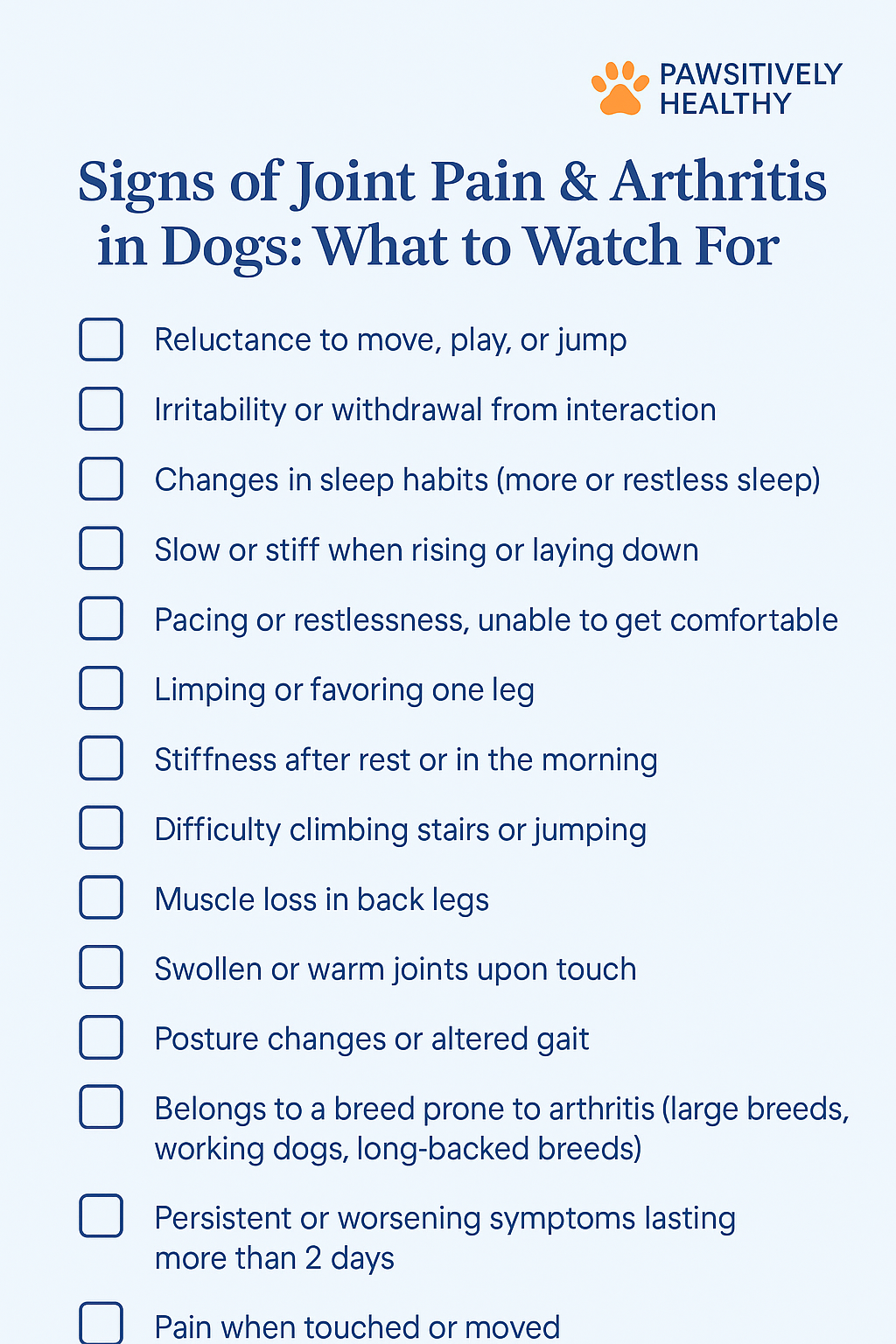
Ready to monitor your dog’s joint health? Download our free checklist now and take the first step towards proactive care.
Download the Printable Joint Pain Checklist to help you quickly spot the signs of joint pain and arthritis in your dog—perfect for easy reference anytime!